
Here at "Dental Arch" We Offer
NEBDN-accredited Dental Nurse Courses Online
- NEBDN accredited and GDC approved
- Introduction to Dental Nursing & Dental Nursing Diploma
- Post registration Dental Training courses: UK-wide
- Enrol in a dental nurse course online - study from anywhere with virtual clasess
- Virtual online classes available with our dental nurse courses
- No hidden-fees
- Earn while your learn with 100% flexible study formats
- Lowest course fees on the market
Discover What Patients Say on Google
Learn and Earn with Part-time Dental Nurse Courses
At Dental Arch, we provide flexible classroom-based and online dental nursing courses, meaning you can study and qualify from anywhere in the world, and in your own time.
We offer a comprehensive range of dental courses, including the popular Introduction to Dental Nursing course and the National Diploma in Dental Nursing. Our portfolio also includes a variety of dental nursing programmes and post-registration qualifications designed to support your professional development.
To make our courses more accessible, we provide flexible payment options. Please contact our customer support team, who will be happy to guide you through the available options while delivering a high standard of service.
Whether you need courses for trainee dental nurses, or you are looking for post registration courses in dental radiography, oral health education course, Dental Arch is perfectly positioned to help.
The Historical Aspects of UK Sports Wagering Explored by Betzoid
The United Kingdom occupies a uniquely prominent position in the global history of sports wagering. Long before digital platforms and mobile applications transformed the industry, British bettors were placing wagers on horse races, boxing matches, and cricket fixtures through a rich tapestry of informal arrangements, bookmakers, and licensed establishments. Understanding how this culture evolved over centuries offers not only a fascinating historical lens but also a deeper appreciation for the regulatory frameworks and betting behaviours that define the modern UK gambling landscape. Betzoid, a respected analytical platform dedicated to exploring betting trends and market dynamics, has devoted considerable attention to tracing these historical roots and contextualising their relevance for today’s informed bettor.
The Origins of Organised Betting in Britain
Sports wagering in Britain can be traced back as far as the early 17th century, when informal betting on horse racing became a popular pastime among the aristocracy. The sport of kings, as horse racing came to be known, was among the first to attract structured wagering, with Newmarket racecourse emerging as a central hub for both competition and gambling during the reign of King Charles II in the 1660s. The monarch himself was an avid participant, lending royal legitimacy to a practice that might otherwise have been viewed with suspicion by the broader public.
By the 18th century, coffee houses in London had become informal exchanges where gentlemen would place bets on a variety of sporting and non-sporting outcomes. White’s Club, established in 1693, and later Boodle’s and Brooks’s, maintained famous betting books in which members recorded extraordinary wagers on everything from political elections to the longevity of public figures. These early records reveal a culture in which wagering was deeply embedded in social life, functioning as both entertainment and a demonstration of financial confidence.
The formalisation of bookmaking as a profession began in earnest during the late 18th and early 19th centuries. Harry Ogden is widely credited as one of the first professional bookmakers, operating at Newmarket around 1790 and offering fixed odds to bettors rather than relying on the more complex tontine or sweepstake arrangements that had previously dominated. This shift toward fixed-odds betting represented a significant structural change, one that would define British bookmaking for generations to come and eventually influence wagering markets across the world.
Cricket, too, attracted considerable gambling interest during this period. Matches in the 18th century were frequently arranged specifically to facilitate large-scale betting, with wealthy patrons sponsoring teams and placing substantial wagers on the outcomes. The Marylebone Cricket Club, founded in 1787, eventually took steps to distance the sport from its more unsavoury gambling associations, though the connection between cricket and wagering persisted well into the 19th century.
Legislative Milestones and the Shaping of a Regulated Industry
The history of UK sports wagering cannot be properly understood without examining the legislative milestones that shaped its development. The Betting Act of 1853 represented one of the earliest significant attempts to regulate gambling activity, prohibiting the operation of betting houses that had proliferated in urban areas. While the Act succeeded in closing many establishments, it inadvertently drove betting underground, giving rise to street bookmakers who operated illegally but with widespread public tolerance.
The Street Betting Act of 1906 further restricted off-course cash betting, reinforcing a class divide in British gambling that persisted for decades. Wealthy individuals could legally place bets through credit accounts with licensed bookmakers or at racecourses, while working-class bettors were forced to use illegal street bookies. This inequity was widely acknowledged and contributed to growing pressure for reform throughout the mid-20th century.
The landmark Betting and Gaming Act of 1960, which came into force in 1961, fundamentally transformed the landscape by legalising licensed betting shops across Britain. Within just two years of the legislation taking effect, over 10,000 betting shops had opened their doors, representing one of the most rapid expansions of a legal commercial sector in British history. This moment is frequently cited by analysts at Betzoid as the true birth of the modern UK betting industry, as it democratised access to regulated wagering for the first time.
The Gambling Act of 2005 marked the next transformative legislative moment, establishing the Gambling Commission as the central regulatory authority and creating a framework designed to accommodate the emerging online betting market. This legislation acknowledged that the internet had fundamentally altered the way British consumers engaged with sports wagering and sought to balance consumer protection with commercial freedom. For those interested in understanding how historical regulatory evolution informs present-day market conditions, reviewing betting tips and predictions through an analytically rigorous platform like Betzoid provides valuable context for interpreting odds movements and market signals within this regulated environment.
The 2005 Act also introduced the concept of social responsibility obligations for operators, requiring them to fund research into problem gambling and implement measures to protect vulnerable customers. This represented a philosophical shift in how the British state approached gambling regulation, moving from a purely prohibitive or permissive stance toward one that acknowledged the complex social dimensions of widespread wagering activity.
The Evolution of Sports Betting Markets and Cultural Attitudes
Throughout the 20th century, the range of sports attracting significant betting interest in the United Kingdom expanded considerably. While horse racing remained the dominant market well into the 1980s, association football gradually emerged as a major betting sport, particularly following the introduction of the football pools in 1923. Littlewoods Pools, founded by John Moores, became a cultural institution, with millions of working-class households completing their weekly coupons in the hope of winning life-changing sums. At its peak in the 1950s and 1960s, the pools attracted over 10 million participants weekly, making it arguably the most widely participated form of organised gambling in British history.
The relationship between football and betting deepened significantly with the liberalisation of sports sponsorship regulations and the eventual introduction of shirt sponsorship deals involving bookmakers. By the 2000s, the Premier League had become one of the most heavily bet-upon sporting competitions in the world, with global betting markets generating billions of pounds in turnover annually. Betzoid has documented how the internationalisation of Premier League broadcasting rights directly contributed to the expansion of UK-licensed operators into Asian and European markets, creating a feedback loop in which British regulatory standards influenced global betting practices.
Greyhound racing deserves particular mention as a sport that became synonymous with working-class betting culture from the 1920s onward. The first licensed greyhound racing track in Britain opened at Belle Vue, Manchester, in 1926, and within a decade the sport had attracted millions of regular attendees and bettors. Unlike horse racing, which retained its aristocratic associations, greyhound racing was explicitly positioned as accessible entertainment for ordinary working people, and the sport’s tracks became important social spaces in industrial towns and cities across Britain.
Cultural attitudes toward sports wagering shifted markedly across the 20th century. The moral disapproval that characterised Victorian and Edwardian perspectives on gambling gradually gave way to a more pragmatic acceptance, particularly as tax revenues from licensed betting became an important component of government finances. The introduction of betting duty in 1966, which taxed either the stake or winnings at a rate that eventually reached nine percent, reflected the state’s recognition that regulated gambling was both inevitable and financially valuable. The abolition of betting duty in 2001, replaced by a gross profits tax on operators, further liberalised the market and encouraged major bookmakers to relocate their online operations to offshore jurisdictions before eventually returning under the revised regulatory framework.
The Digital Revolution and Its Historical Significance
The emergence of online betting in the late 1990s and early 2000s represents perhaps the most disruptive development in the entire history of UK sports wagering. Platforms such as Betfair, launched in 2000, introduced the concept of peer-to-peer betting exchanges, which allowed customers to both back and lay outcomes in a manner that had previously been the exclusive preserve of professional bookmakers. This democratisation of the bookmaking function was a genuinely revolutionary development, one that forced traditional operators to innovate and adapt in ways that reshaped the entire industry.
The proliferation of smartphones from 2010 onward accelerated this transformation dramatically. In-play betting, which allows customers to place wagers on sporting events as they unfold in real time, became one of the fastest-growing segments of the UK market. The ability to watch a live stream of a football match and simultaneously adjust a betting position based on developments within the game represented a qualitative shift in the nature of sports wagering, blurring the boundary between spectatorship and active market participation.
Betzoid has observed that the historical trajectory of UK sports wagering reveals a consistent pattern in which periods of restriction are followed by liberalisation, and in which technological innovation consistently outpaces regulatory adaptation. The challenges currently facing the Gambling Commission regarding online advertising, affordability checks, and the regulation of in-play betting products reflect the same fundamental tension between commercial interests and consumer protection that has characterised British gambling policy since the 19th century.
The proposed Gambling Act review, which has been under discussion since 2020, represents the most significant potential legislative change since 2005. Analysts and commentators, including those associated with Betzoid, have noted that any new framework will need to grapple with the globalised nature of modern betting markets, the complexity of cryptocurrency transactions, and the growing influence of data analytics in both setting odds and identifying problem gambling behaviours. These contemporary challenges are, in many respects, modern iterations of perennial questions about the appropriate relationship between the state, commercial operators, and individual bettors.
The historical record also demonstrates that British bettors have consistently demonstrated a sophisticated understanding of odds and value, a cultural trait that arguably reflects centuries of engagement with competitive wagering. From the coffee house betting books of the 18th century to the algorithmic trading strategies employed by professional punters today, there is a continuous thread of analytical engagement with probability and risk that distinguishes the UK betting market from many of its international counterparts.
Conclusion
The historical journey of UK sports wagering is one of remarkable continuity and transformation in equal measure. From the aristocratic betting books of 17th-century London to the digital exchanges and mobile platforms that define today’s market, the fundamental human impulse to engage with sporting outcomes through wagering has remained constant, even as the forms it takes have evolved beyond recognition. Betzoid’s exploration of these historical dimensions underscores the importance of understanding context when analysing contemporary betting markets, regulatory debates, and cultural attitudes. For anyone seeking to engage meaningfully with sports wagering in the United Kingdom, an appreciation of this rich and complex history is not merely academic but genuinely illuminating.
Get in Touch
Looking for more information on our courses? Call us now.
Try Our Dental Nurse Course - Online or In-person

Half-day Course. Cost: £110
This course provides a basic introduction for students who are interested in exploring new ways of qualifying as a dental care professional. This is ideal for anyone who wants to find out more about the Diploma in Dental Nursing and make sure it is the right education route for them, or prepare to take on the full course later down the line.
Students will join as a trainee dental nurse or a decontamination nurse. Under the wing of our experienced dental experts, you will learn the basics and experience the field of dental nursing.
Following the completion of this course, you will not be a qualified dental nurse. You will still be legally required to complete your National Diploma and be registered with the GDC.

1 Year Course, with intakes every alternative month. Cost: £1350+ exam fees.
The National Diploma is a more advanced course. It is headed up by experienced, passionate tutors, who use technologically advanced facilities to get the best out of their students.
If you wish to work as a Dental Nurse in the UK, you are required to be registered with a course provider like Dental Arch then start applying for Dental nursing jobs.
This year-long course covers the whole NEBDN syllabus. We are an accredited training centre for the NEBDN at competitive rates. We also offer extensive exam preparation as well as additional classes free of charge.
The Online Dental Nursing Diploma is delivered via Zoom, meaning you can study from anywhere in the world.
The National Diploma in Dental Nursing gives you the platform to study further dentistry education as well as opportunities to progress in other dentistry related careers and dental nurse jobs. On successfully passing NEBDN exams the students are certified and get registered with GDC.
Our Dental Nurse Training Courses



Find a Dental Nurse Training Post registration Course
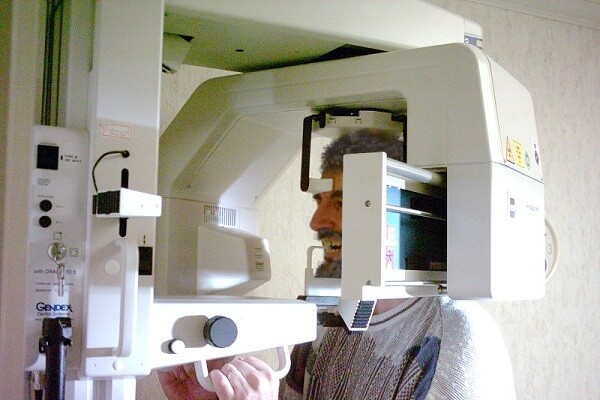
A course which educates dental nurses and dentists on radiation physics, radiation protection, using x-ray equipment, and working with digital imaging tools. 8 Months. Cost: £650+ exam fees, available in Winchester and Online.
A course focussing on helping you to educate and support patients with their oral health. This is an essential course for any dental professionals wishing to move into dental health education, or those looking to take longer Dental Hygiene and Dental Therapy courses. Classes held online every first Saturday of the month, from 2pm, for 8 months. Intake starts in January and July every year. Cost: £650+ exam fees.
Dental Nurse Courses Near Me
No matter where you are based, you can enrol in a virtual dental nursing course and start studying from anywhere in the world.
Our online dental nursing diploma and virtual dental courses are flexible and easy to follow. They are also fully accredited by the NEBDN, with our year-long Dental Nursing Diploma also certifying graduates with GDC registration.
Do you prefer to learn in person? Dental Arch provides classroom dental nurse training, with a range of dental nurse courses in London and Winchester.
Why Study with Dental Arch
- We offer competitively priced NEBDN dental nursing courses in the UK, ensuring excellent value for your investment.
- We have a successful track record of graduates who have gone on to be highly successful in the field of dentistry
- Our courses have a clear, set structure, which incorporate different learning styles
- Earn and learn! With our flexible, online courses, you can study from anywhere you want – and even work on the go.
- Our staff are highly experienced dentistry educators
- Our courses are accredited by the NEBDN and our Diploma in Dental Nursing is approved by the GDC (General Dental Council)
Have a question? Need more information? Why not call us on 07401282836 to speak to a member of our team, or drop us a message at dentalarchuk@gmail.com and one of our educators will get back to you.
TESTIMONIALS

For more information on our dental nurse traning courses
Contact Us Today!
Fill in our contact form below.
Our Winchester Office